
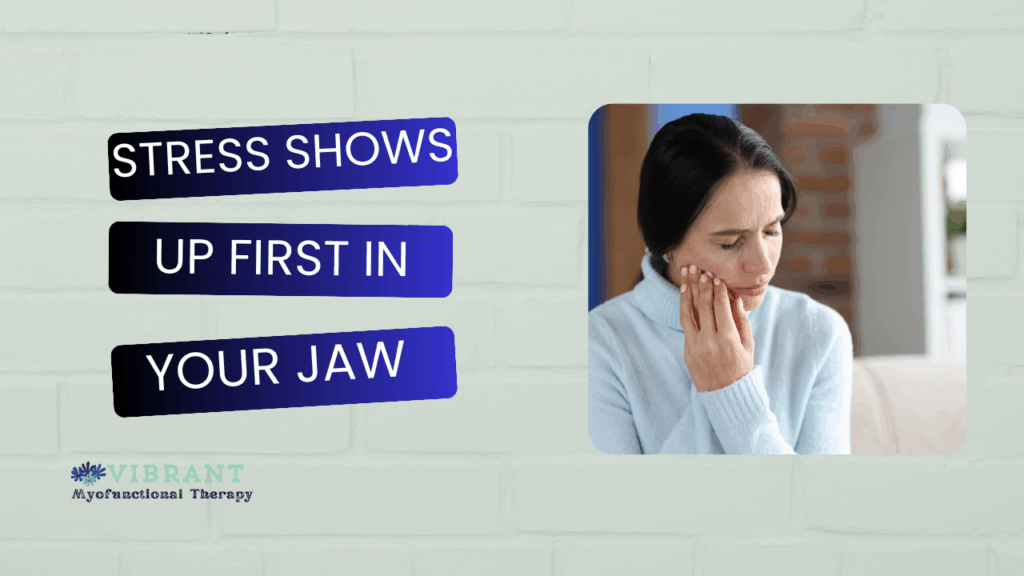
Jaw tension and clenching are often blamed on stress, but stress jaw tension usually has a deeper cause. Your jaw tightens because of how your airway, breathing, and nervous system are connected. If you only treat stress, the cycle continues.
The Stress–Jaw Connection
When breathing is unstable—mouth open, tongue low, airway collapsing—your body shifts into survival mode. Your brain senses that oxygen is threatened, so it signals your muscles to brace. The jaw is one of the first places this shows up.
That clenching isn’t just stress. It is your airway trying to stabilize itself. Add in daily pressure from work, family, or hormones, and the tension doubles down.
Signs Your Jaw Pain Isn’t Just Stress
Morning headaches or facial tightness
Tooth wear or cracks from grinding
Sore muscles around your jaw or temples
Clicking or popping in the TMJ
Neck and shoulder tightness that never goes away
These are not random symptoms. They are signals from your jaw that your breathing mechanics need attention.
What Actually Helps
Massage or night guards may help short term, but they don’t solve the cause. Relief begins with:
Nasal breathing
Training your tongue to rest on the roof of your mouth
Supporting your airway during sleep so your jaw does not have to work
Improving oxygen flow so your nervous system calms
The Bottom Line
If your jaw is always tight, don’t just blame stress. Look at your airway. When breathing stabilizes, your nervous system calms, and your jaw finally gets the message to relax.
Start exploring the root cause with the [Free Airway Quiz]. Or, if you are ready for answers, schedule a Free Airway Fit Call or a full Vibrant Airway Assessment today.