
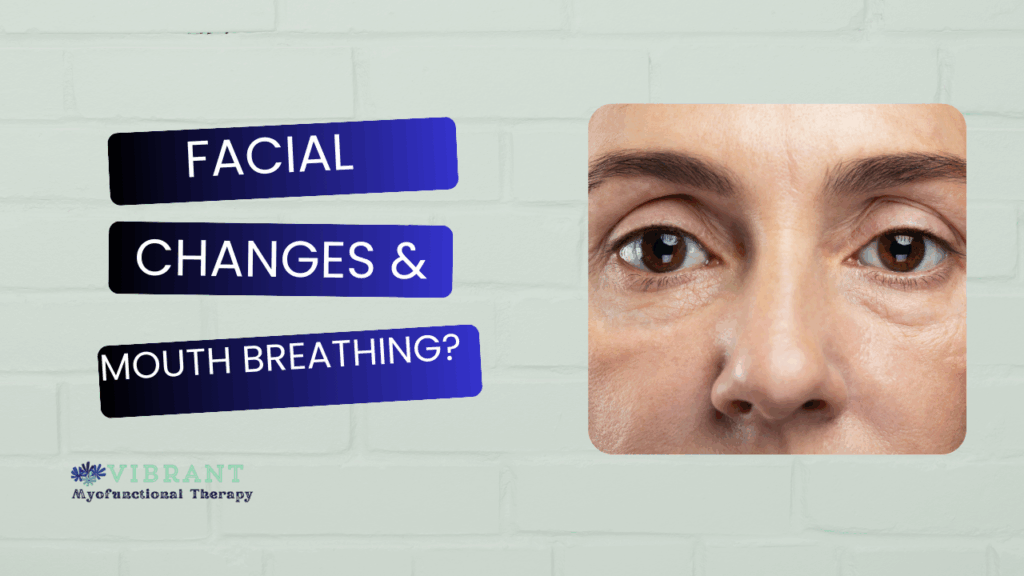
We expect some shifts with age. A few fine lines. A little less bounce in the skin.
But what if your face was changing in ways that had nothing to do with aging and everything to do with how you breathe?
Spoiler: It probably is.
Mouth Breathing Changes More Than Your Lips
Chronic mouth breathing is not just bad for your teeth or energy levels. It impacts the structure of your entire face, slowly at first, then more noticeably with time.
Here is what often happens:
The tongue does not rest on the roof of the mouth where it should be
Without that support, the upper jaw develops less forward and less wide, leaving less midface structure
The face appears longer, the jawline softens, and the cheeks lose volume
The nose may look flatter, while posture and tension pull forward
It sounds dramatic, and it is. But it happens so gradually that many people chalk it up to “just aging” when really it is structural compensation showing up on your face.
This Is Not Just Cosmetic
These changes are not about vanity. They are about function.
When oral posture shifts and facial tone weakens, the airway often becomes more narrow. That can lead to:
Snoring or noisy sleep
Jaw clenching and grinding
Shallow sleep and poor hormone regulation
Low energy that does not improve with rest
Facial structure reflects airway health. If your face is collapsing forward, so is the space you breathe through.
Why It Shows Up in Your 30s and 40s
As estrogen and collagen decline, posture and tone are harder to maintain. Add years of orthodontics, stress, or mouth breathing, and the shifts become obvious in your 30s and 40s.
You do not just feel different. You look different. And not in a way that a new serum can fix.
What You Can Do
The good news is you are not stuck. You can support your face and airway from the inside out.
Here is what helps:
Reclaim tongue posture on the roof of the mouth
Address mouth breathing during the day and at night
Release clenching by improving jaw and breath mechanics
Focus on function first and let the aesthetics follow naturally
It is never too late to interrupt the downward spiral. You do not have to reverse everything. You only need to change the direction.
Bottom Line
If you’ve noticed facial changes and don’t love what you see, it might not just be aging. Mouth breathing could be reshaping your face and shrinking your airway. What if it is fixable? Book a Vibrant Airway Assessment to explore your symptoms and take the first step toward healthier breathing and lasting change.