
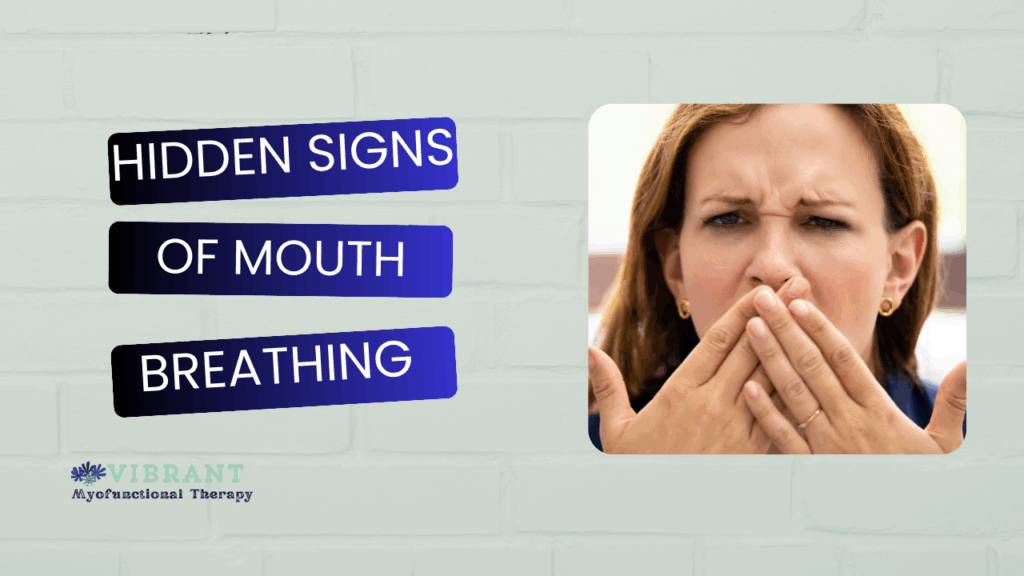
Most people think mouth breathing is just about being congested or having allergies. But the truth is, the hidden signs of mouth breathing can show up in your face, your energy levels, and even how well you sleep.
What Mouth Breathing Really Does
When you breathe through your mouth instead of your nose, a few key things happen:
Your airway becomes less stable, making it harder for your body to relax
Your nervous system shifts into alert mode, raising stress hormones
Your tongue rests low in your mouth, which changes facial posture over time
The Subtle Clues You Might Miss
Mouth breathing doesn’t always look dramatic. Some of the hidden signs include:
Waking up with a dry mouth or sore throat
Dark circles or puffiness under the eyes
Chapped lips that never quite heal
Forward head posture or tension in your jaw and neck
Feeling unrested even after a full night’s sleep
Why It Matters for Your Face and Sleep
Your nose is designed to filter, warm, and humidify the air you breathe. It also signals safety to your body, allowing you to drop into deep, restorative sleep. Mouth breathing skips those steps and keeps your body in survival mode. Over time, it can even affect the way your face looks, contributing to sagging, tension, and a tired appearance.
What You Can Do About It
The good news is that mouth breathing is not permanent. With the right awareness and support, you can:
Train your tongue to rest on the roof of your mouth
Practice low, slow nasal breathing during the day
Support your airway at night so your body feels safe to rest
Think of it as breath training that restores both energy and confidence.
Ready to See If This Fits You?
If you suspect mouth breathing is behind your fatigue or tension, you don’t have to keep guessing. Book a Free Airway Fit Call or go deeper with a Vibrant Airway Assessment to understand what your symptoms are really telling you.