
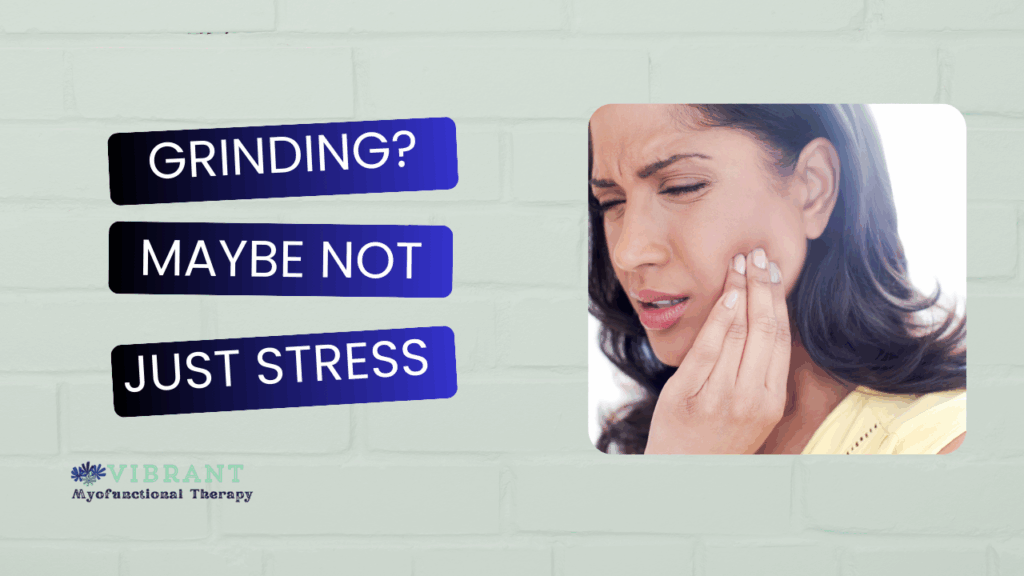
Ever wake up with a sore jaw and think, “Did I spend the night fighting crime in my sleep?”
If your teeth feel like they’ve been in a turf war, chances are you’re grinding or clenching at night. And while it’s easy to blame it on stress, there’s usually more going on under the surface.
Your Body’s Not Just Tense, It’s Protecting You
Bruxism (aka clenching and grinding) isn’t just a “bad habit.” It’s a reflex. One that often kicks in when your airway is struggling.
When you sleep, your muscles relax, including the ones that help keep your airway open. If your body senses collapse, it acts fast. Clenching the jaw can temporarily open the airway, helping you get more air.
It’s not a choice. It’s survival.
What That Means for You
Your body might be compensating, not just stressed
Your sleep isn’t restorative, even if you don’t fully wake up
Jaw tension, ear pain, or neck tightness are all linked
Over time, grinding can:
• Flatten your teeth
• Damage your TMJ
• Alter your bite or facial structure
• Keep your nervous system stuck in “high alert”
What’s Behind It
Common triggers include:
Low tongue posture
Mouth breathing
Narrow palate or recessed jaw
Sleep-disordered breathing (even without full apnea)
Why Relaxation Alone Won’t Fix It
You don’t just need to “stress less.” You need to retrain your airway and show your nervous system it’s safe.
That can look like:
Myofunctional therapy to put the tongue where it belongs
Breathwork to recalibrate baseline breathing
Nasal hygiene to make nose-breathing easier
Functional assessments that go deeper than a night guard
Bottom Line
If you’re grinding your teeth, your body’s not misbehaving. It’s protecting you.
The real fix isn’t punishing your jaw with a mouthguard. It’s solving the airway problem that set off the alarm.
👉 Book your Vibrant Airway Assessment today.