
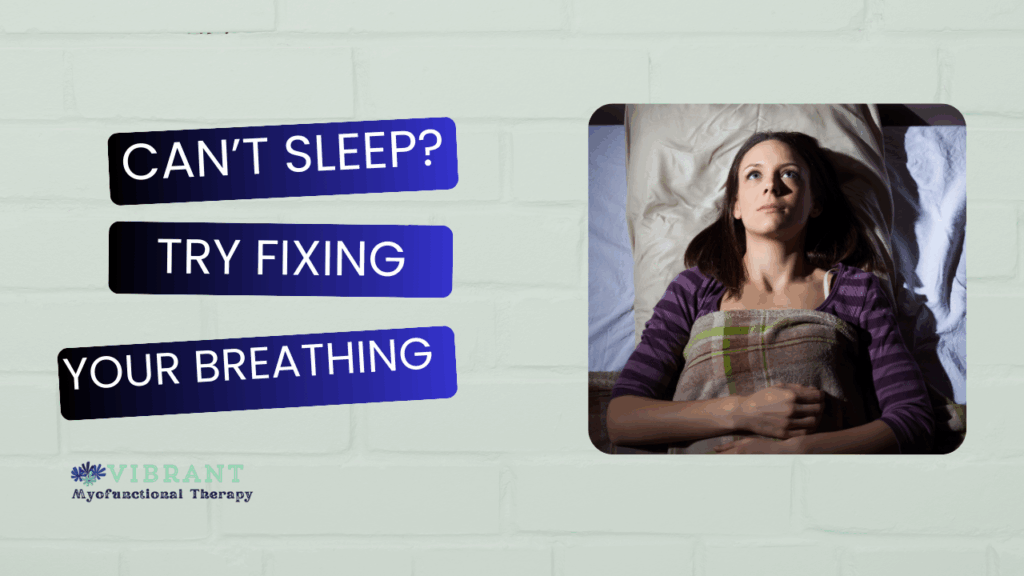
You don’t necessarily have a sleep disorder. You might have a breathing pattern problem. And no one told you to look at your tongue posture. That low energy, poor sleep, brain fog, clenching, and tension? It’s not because you’re doing something wrong. It’s because your tongue isn’t where it’s supposed to be.
Your tongue is a posture muscle, not just for talking and tacos
The tongue is meant to rest gently on the roof of your mouth—24/7. When it does, it supports your palate so your airway stays open, your nasal breathing so your nervous system stays calm, and your jaw alignment so your TMJ isn’t stuck in survival mode. But when your tongue is low, lazy, or tied down, everything else starts to unravel.
Why you’re still tired even with good habits
You can have a solid bedtime routine, blackout curtains, and a magnesium cocktail—and still wake up exhausted if your body is fighting for air all night. Mouth open, airway collapses, cortisol spikes, sleep disrupted. It’s not random. It’s mechanical. And it’s fixable.
Why melatonin isn’t the fix
Melatonin tells your body when to sleep. It doesn’t keep you asleep or guarantee deep, restorative rest. That’s your airway’s job. That’s your tongue’s job. And they depend on how you breathe every single day.
What real sleep support looks like
Train your tongue to rest on the spot
Keep your mouth closed at night (gently)
Slow your breathing in and out through your nose
Focus on awareness, not dependency
Small shifts, big impact. Once your airway starts working with you instead of against you, everything downstream begins to change.
The bottom line
If you want real, lasting sleep support, start with your tongue posture—not your supplement drawer.
Take the [Free Airway Quiz] to learn what your symptoms are trying to tell you. Or feel free to book a Vibrant Airway Assessment to explore your symptoms.