
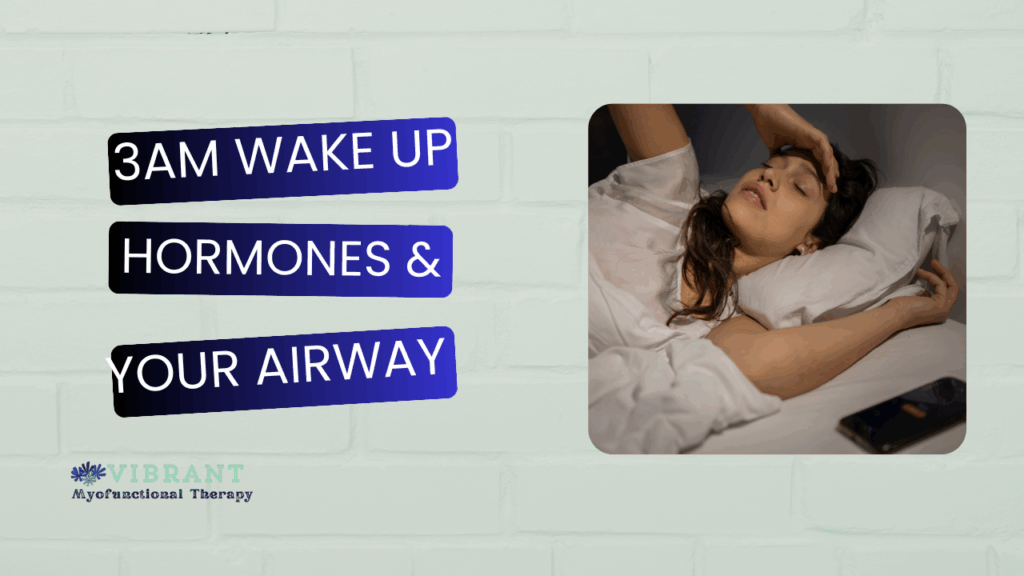
Do you wake up around 3am, almost every night?
You are not fully awake, not fully asleep. Your mind races. Your heart feels loud. By 7am you are drained.
You try less caffeine, more magnesium, earlier bedtimes. Yet you still wake up.
This pattern is common. And it might not start with your hormones. It may start with your airway.
Why the Airway Matters
When you breathe poorly during sleep—mouth open, tongue low, snoring, or clenching—your brain senses a dip in oxygen.
Not enough to wake you fully. Just enough to trigger stress.
Your body responds with cortisol. This stress hormone helps muscles stay active so you can keep breathing.
As a result, you may notice:
Waking wide awake around 3am
Restless or shallow sleep
Feeling tired even after “sleeping” all night
Midday crashes and irritability
Add perimenopause, when hormone balance is already shifting, and sleep becomes even more fragile.
But My Hormone Labs Look Fine…
They might be. Yet your symptoms are real.
Airway dysfunction often goes unseen. You do not need full sleep apnea to have disrupted breathing. Even subtle airway collapse or tongue posture problems can spark stress responses without showing up on labs.
Simple Steps to Try
You can start with small shifts:
Keep your mouth gently closed at night
Train your tongue to rest on the roof of your mouth
Breathe in and out through your nose
Track your wake-ups, because they are clues, not random
These habits send calmer signals to your body. Over time they can lower cortisol spikes, support hormone balance, and improve sleep.
The Bottom Line
That 3am wakeup is not just in your head. Your hormones may be reacting to an airway problem, not causing it.
👉 Start uncovering answers with the [Free Airway Quiz]. Or go straight to the Vibrant Airway Assessment.