
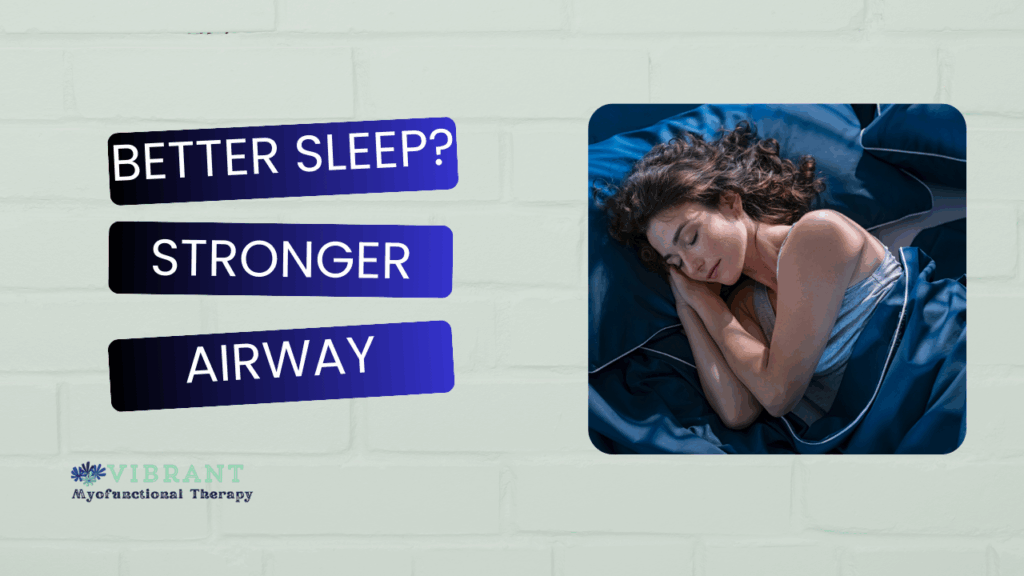
Sleep should be simple: lie down, close your eyes, wake up refreshed. If only it were that easy. For many adults, sleep apnea and snoring turn nights into a battle for breath—often getting worse with age.
The good news? Airway exercises through orofacial myofunctional therapy (OMT) can make a real difference.
Why Sleep Gets Harder With Age
As we get older, the muscles in the mouth, tongue, and throat naturally lose tone—just like other muscles in the body. That loss of strength makes the airway more prone to collapse during sleep, setting the stage for apnea. Add in factors like weight changes, hormonal shifts, chronic congestion, or poor tongue posture, and sleep gets even lighter and less restorative.
Where Myofunctional Therapy Fits
Think of OMT as a workout plan for your airway. Targeted exercises can:
Strengthen tongue and airway muscles
Encourage nasal breathing instead of mouth breathing
Stabilize your airway for smoother, uninterrupted rest
Even if you use CPAP, studies show OMT can improve results by supporting your muscles instead of relying only on a machine. For mild to moderate cases, therapy alone can be life-changing.
What the Research Says
Clinical studies have shown OMT can:
Reduce apnea severity
Decrease snoring
Improve daytime energy, focus, and mood
It’s a natural, evidence-based approach to better sleep at any age.
Cross-links
Jaw pain and airway tension are often connected—see how they overlap in The Airway Connection.
Tongue posture doesn’t just affect breathing, it impacts digestion too—learn more in The Airway and Digestion Connection.
- Curious if airway strengthening could help you sleep better? Book a Free Airway Fit Call or a Vibrant Airway Assessment today.